


Your Pre-Engineered Metal Building Project Starter Guide
Looking to decide if a Pre-Engineered Metal Building (PEMB) could be the right solution for your construction project? Look no further! We put together this guide on how to pick the best prefabricated building system based on your budget and design goals.
Do I Need a Pre-Engineered Metal Building (PEMB)?
So, you’ve decided that new construction is the next move for your business or personal property, Awesome! You know you need a new warehouse, garage, commercial building, or Ag structure.
But what happens next?
Let’s save you some time and money by getting into the details of planning your prefabricated building project. Our team has years of experience with Pre-Engineered Metal Buildings, and that could be the difference between honing in on the prefabricated building system you need and wasting hours going in circles on the internet only to purchase the wrong thing.
What Kind Of Prefabricated Building Should I Use?
The first thing you’ll need to decide is what kind of prefabricated building system is going to be right for your project. Here at PreFab Depot, we connect you to manufacturers of “Pre-Engineered Metal Buildings” (PEMB), sometimes also known as “Rigid Frame” buildings or even “Red Iron” buildings.
The name “Red Iron” comes from the maroon red primer that was used to paint the heavy-gauge steel beams in the older days of the PEMB industry.
Before we get into the pros and cons of Pre-Engineered Metal Buildings, it’s important to know that they are not the only prefabricated building systems out there on the market today. While we believe they’re the best, strongest, and most durable permanent building solution around, there may or may not be other ways to achieve your project goals if you’re looking for something small, temporary, or cheaply made. For example, you could use a “pole barn,” “quonset hut,” “tube steel building,” or even a “Tuff Shed” to knock out a small project or outbuilding for a very low price.
When Should I Choose A Pre-Engineered Metal Building (PEMB)?
In general, you should consider using a PEMB system when you are looking for a strong, durable, permanent building solution for your commercial or personal building project, especially when you are building a large space or one with a wide “span distance.”
A building’s “span distance” is the space from wall to wall or between structural support columns – the longest space “spanned” by the rafters of the building. This is not to be confused with the “width” of the building, since some buildings use multiple spans between sets of interior columns to get from one exterior wall to the other.
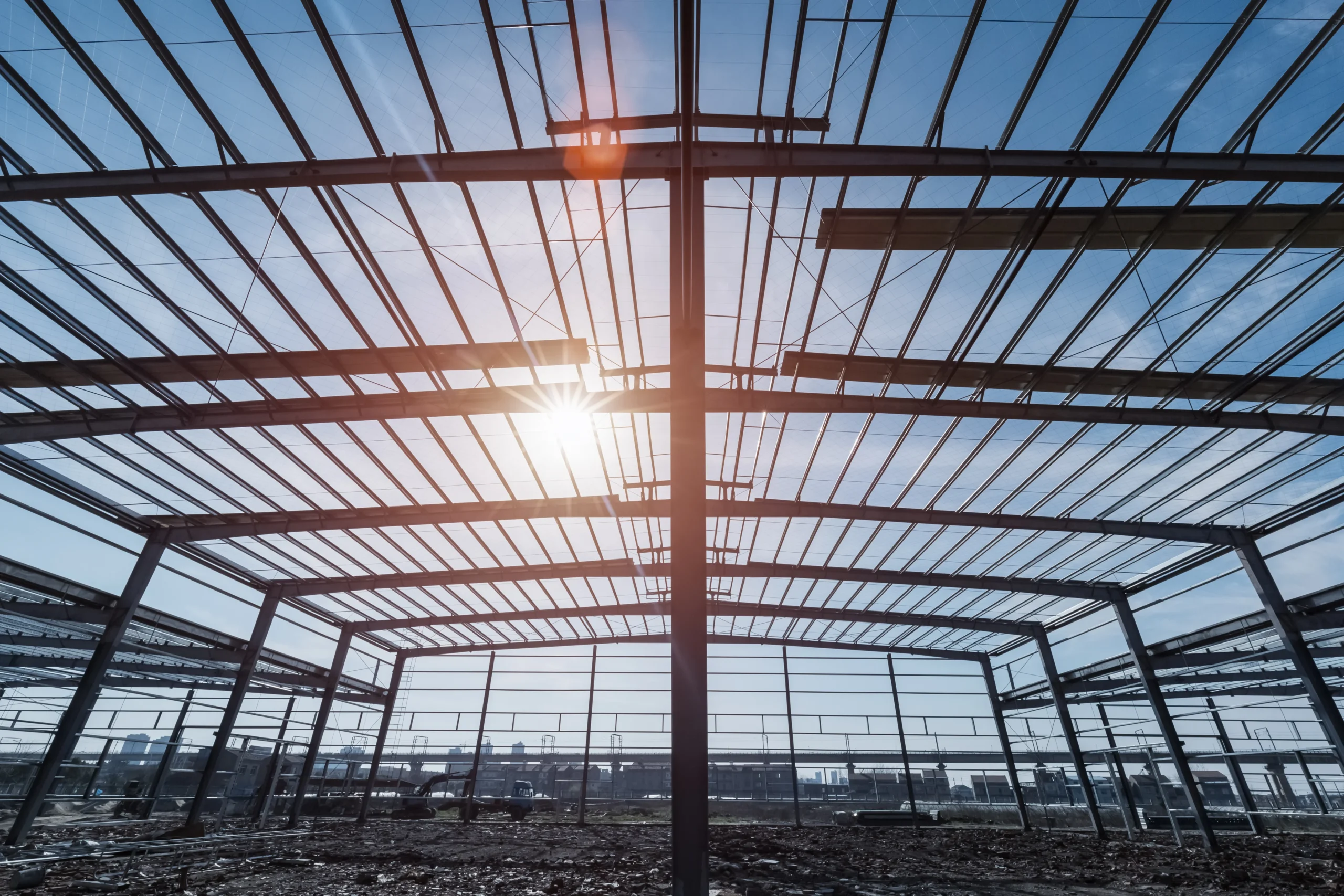
Pre-Engineered Metal Buildings (PEMB) are perfect for buildings with wide span distances because they use heavy-gauge steel I-beams to form their roof rafters. These large I-beams are typically designed and milled custom for each PEMB building project, according to the exact layout, snow and wind loads, and use case of that building system. This makes Pre-Engineered Metal Buildings extremely versatile, with the ability to feature a “clear span” of up to 250’ in some cases!
PEMB Clear Span Interior – Vaulted Ceilings With Lots Of Room
“Clear Span” is an important term in the Pre-Engineered Metal Building (PEMB) industry. It means that there are no interior columns getting in the way of your building’s floor space, even in very wide buildings. Clear Span also means that there are no overhanging trusses above your head when you are standing under the rafters. The entire interior space is completely open and clear, all the way up to the I-beam rafters which directly support the roof. Another term for this look is “vaulted ceiling” or even “cathedral ceiling.”
For a number of industries and use cases, having a Clear Span building is an absolute must. For example, if you’re building a manufacturing facility that will have heavy equipment moving around the factory floor, interior columns could be a safety hazard or at least a significant obstacle to your everyday operations. Pre-Engineered Metal Buildings can even be designed to house a “bridge crane,” which rolls up and down the factory floor delivering heavy loads to any station or moving heavy items through an assembly line.
Even if you’re not constructing a building for heavy industry, a clear span interior could still come in handy. Indoor sports facilities choose Pre-Engineered Metal Buildings so that there’s more space in the roof of the building for a ball to fly without banging into triangular roof trusses and causing a stoppage of play. If you’re planning to build a second story or a lofted area, you would also benefit from the lack of overhanging trusses offered by a Pre-Engineered Metal Building (PEMB), giving you more usable space right up to the roof framing of your building.

Long Warranties Forged In Steel
Another important reason business owners and private builders choose Pre-Engineered Metal Buildings is because they are tough as nails. If you want to get technical, they are much much tougher than nails!
There is no stronger common building material than structural steel. There’s a reason that structural steel is the main choice for bridges, skyscrapers, and high-load structural beams. When you build an entire structural system out of custom-milled steel, the “building envelope” it creates is virtually indestructible! Because of the awesome properties of structural steel, the pre-engineered metal building (PEMB) industry commonly offers warranties of 30 to 50 years, or even Lifetime Warranties.
A Pre-Engineered Metal Building properly designed for the snow and wind loads of the location where it will be installed will stand the test of time and might be one of the only things left standing after record winds or heavy snow storms cause other nearby structures to fail. Our preferred manufacturers have experience designing for extreme conditions where other kinds of buildings fall short – from hurricane-prone Miami-Dade County to Tornado Alley to the 100+ pound per square foot snow loads of the upper Northeast. If you want your building to be the last thing standing after a disaster wrecks everything else in sight, look no further than a Pre-Engineered Metal Building (PEMB).
What Are My Other Options?
Of course, a Pre-Engineered Metal Building is not the right solution for every project. If you prefer the “quick and dirty” approach or you’re working on a budget and prioritizing savings over longevity and quality, you have a few other options in the prefabricated building world.
“Pole barns” are a common solution for smaller, rural buildings like barns or small garages and workshops. A pole barn uses lumber 4×4 posts as its main columns, 2×4 beams as its structural framing, and engineered lumber triangle trusses as its roof rafters. Pole barns are often sheeted with metal panels on the roof and walls, meaning they can look similar to Pre-Engineered Metal Buildings from a distance.
Even though they might look similar from a distance, pole barns are generally a much cheaper, less permanent structure than a PEMB. For example, the structural wooden posts are usually sunk directly into the concrete footers, so if they ever rot out or weather, then the entire structure is in jeopardy and may need to be replaced or majorly renovated. If you live in a humid area or if your building site is at risk for occasional flooding, this might be a major concern.
Another limitation on pole barns is their span distance. If your building is going to be less than 1,000 square feet or less than 40 feet wide, this probably won’t be a problem. On the other hand, if you need a wide span distance and don’t want interior columns getting in the way of your floor area, pole barns can present some major limitations. It just depends on what you need.
Tube Steel, Light-Gauge, and Quonset Hut Buildings
If you know you want to build with steel but you’re not sure you can afford a premium Pre-Engineered Metal Building (PEMB) system, you can explore “tube steel,” “light-gauge,” and “Quonset hut” building systems. These are less expensive options to get you into an engineered steel structure, but they can come with limitations on their location, use case, and warranty.
“Tube steel” buildings were originally used as “carports” and other kinds of light-duty sun shades and shed structures. They use square steel tubing as their main framing system, which is bent into roof trusses and modified for vertical columns. This building typically does not come with a long warranty, if it is warrantied at all, but it can be a great option if you’re looking for a small building that can be shipped to your jobsite in a couple of days or weeks. Because they’re made from “off-the-shelf” components, tube steel buildings don’t need to be custom manufactured and can be shipped from your supplier as soon as you place the order. The big drawback of this quick turnaround is the lack of customizability. These structures will be rated to certain maximum snow, wind, and seismic loads, and if your area is outside these conditions, you’re out of luck. You also will not get stamped permit drawings, which is kind of a red flag!
“Light Gauge” steel buildings are a newer product which uses an approach somewhat similar to a Pre-Engineered Metal Building” with lighter materials. For example, there are no milled I-beams in a light-gauge structure, only “cold-formed” steel components at a much thinner gauge. Just like pole barns and tube steel buildings, light gauge buildings are limited in size, with clear spans maxing out at around fifty to sixty feet. That’s only a quarter of the clear span distance possible with a classic Pre-Engineered Metal Building (PEMB)! However, light gauge steel buildings are definitely more robust than tube steel buildings and pole barns, and they are a reasonable alternative to consider for buildings within the 1,000 to 5,000 square foot category.
“Quonset hut” buildings might be the original prefabricated metal structure! Originally developed by the US Navy during World War II, Quonset huts are made from rough corrugated steel bent into semi-circular shapes and shipped in large sections to be bolted together on the jobsite. The major limitation of Quonset huts is their design: every Quonset hut looks like a long tube half-buried in the ground. The only things you may be able to customize are the width of your semi-circle and the length of the tube. These buildings are not considered a serious alternative to Pre-Engineered Metal Buildings (PEMB) in most cases. However, if you want to get a roof up as soon as possible and you don’t mind the look, they are a classic American invention which continues to see service today.
So, Which PEMB is Right for You?
Now that you’ve gotten a sense for the pros and cons of Pre-Engineered Metal Buildings (PEMB) as well as a quick overview of the other prefabricated building styles available for sale today, which one do you think is right for your next project?
If you need a permanent, engineered building system at an affordable price that can be customized to your design and erected quickly and efficiently, you should consider a Pre-Engineered Metal Building System (PEMB). The versatility, durability, and cost efficiency of these systems is unmatched in many commercial, industrial, sporting, equestrian, and aviation applications, which is why PEMB systems dominate the prefabricated construction marketplace. On the other hand, if your main priority is keeping costs down and you don’t care much about permits, warranties, or longevity, there are definitely other options to consider.
Please continue back to our home page, PreFabDepot.com, and click “Quote My Building” to get in touch with the best US-based PEMB manufacturers in the nation. We are eager to connect you with pre-vetted companies that take pride in their craft, source only US-milled steel products, and keep up a reputation for premium customer service.
Hire the Best, Ditch the Rest, it’s time to Forge Ahead with your construction project!
